ServicesBattery Storage
Battery Storage in West Valley City
When a storm takes the grid down, a home battery takes over in moments. We size it to the circuits you actually need, mount it cleanly and set it to charge from your solar every day, so you are ready before the next outage, not scrambling after it.
Stored power for the hours the grid is out
A battery system holds the extra energy your panels make during the day. When utility power fails, an automatic transfer separates your home from the grid and the battery feeds a protected set of circuits. Most people never touch a switch.
It is the right call if outages have already cost you a freezer of food, if someone at home relies on powered medical equipment, or if you want your solar to keep working when the lights go out. Panels alone shut off during a grid failure for line-worker safety. A battery changes that.
We plan the work carefully because the battery and its wiring will sit on your home for many years. That means tidy conduit runs, a mounting spot that respects clearances, and settings explained in plain terms before we leave.
What a battery installation includes
- A load review of your home
- We go through your panel and ask how you live. Furnace blower, refrigerator, well or sump pump, internet and a few lights are the usual starting list, and we size the battery around that.
- A protected-loads subpanel
- The circuits you want during an outage move to a dedicated subpanel. That keeps a dryer or range you can do without for a day from draining the battery.
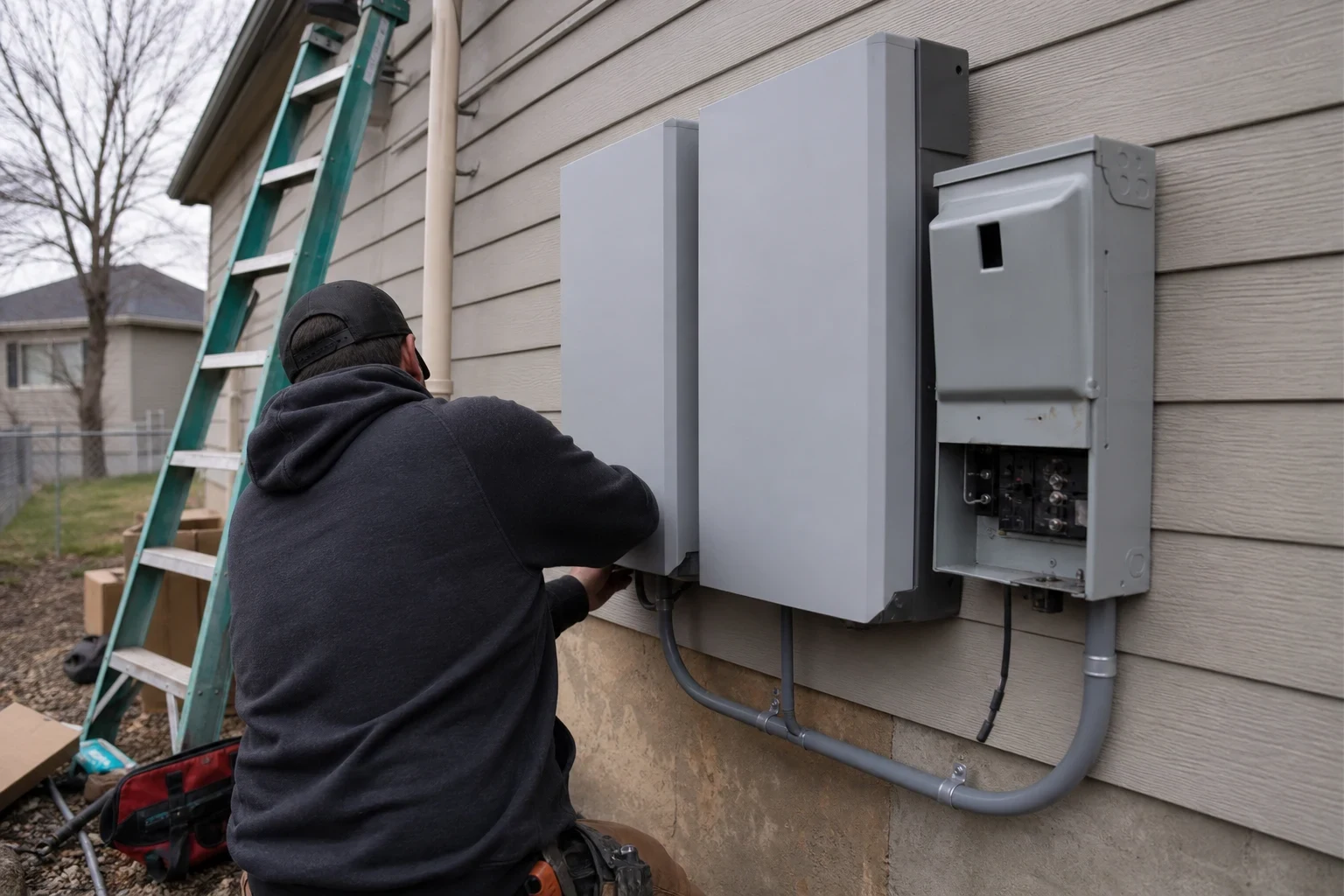
- Careful mounting and conduit
- Batteries go on a garage or exterior wall with the clearances the manufacturer and code call for. Conduit runs square and is strapped neatly, and exterior penetrations are painted or sealed so they hold up.
- Paperwork handled for you
- Our team takes care of the electrical permit, is on site when the inspector comes and works through the interconnection forms your utility needs. None of it lands on your desk.
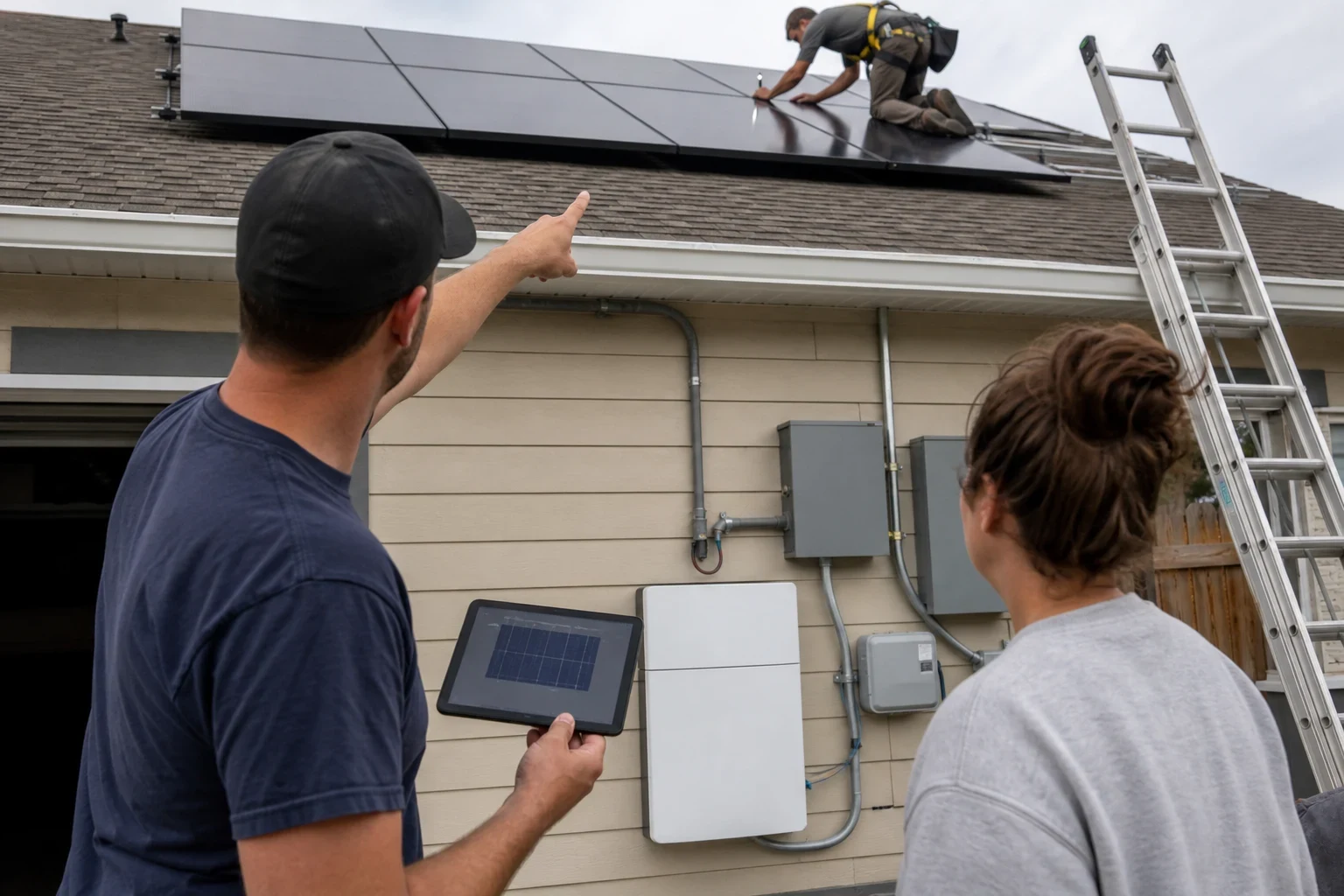
- Setup and a walkthrough
- We set the backup reserve, connect the monitoring app and show you what an outage will look like on your phone and at the equipment.
Signs a battery makes sense for your home
Outages have already cost you
Spoiled food, a cold house or a flooded basement after a sump pump stopped are all reasons people call us. A battery is the steady answer to a problem you have already met.
Your solar goes dark with the grid
Many owners are surprised the first time the power fails and their panels produce nothing. Adding storage lets that energy keep serving your home.
Someone depends on steady power
Oxygen concentrators, CPAP machines and refrigerated medication do not wait for crews to restore a line. Backup power buys time and calm.
Storm seasons make you uneasy
Wasatch Front windstorms and winter snow loads can bring lines down without much warning. If you check the forecast and worry about the power, storage is worth a conversation.
You want more use from your own solar
Storing daytime production and using it in the evening can make better use of your system than sending all of it back to the grid.
What shapes the cost of battery storage
Battery pricing comes down to how much of your home you want running during an outage and for how long. We build each price from your own loads and electrical panel, and the written estimate lists every line. Financing with $0 up front is available.
Storage capacity
More stored energy means longer backup or more circuits covered. Plenty of homes begin with one battery and add a second later.
Which circuits you protect
Lights and a refrigerator draw far less than central air or a well pump. Big motor loads can also call for more output, not only more storage.
The condition of your main panel
If your panel is older or has no open spaces left, it may need work before a battery can be tied in safely. When that is the case, we show you what we found and explain the reason in plain terms.
Mounting location and distance
Every extra foot between the battery and your main panel adds wire, conduit and install time. A spot close to the panel usually keeps that part of the price down, while a far garage corner or distant exterior wall raises it.
Whether you already have solar
A battery paired with new panels is planned as a single job. Adding storage to an existing system depends on the inverter already on your home.
How the work goes, start to finish
- 1
A phone conversation first
You call, and we talk through your outages, your solar and what you want kept running. If it helps, we can set up a free virtual appointment and look at your electrical panel over video.
- 2
Site visit and written plan
We confirm the mounting location, measure conduit runs and check your main panel. You get a written, line-item plan with the battery size, the protected circuits and what is included.
- 3
Permits and scheduling
We take care of the permit and utility paperwork ourselves, then agree on an install day that suits you. You will know what to expect before anyone arrives.
- 4
Installation day
Power is off for part of the day while we connect the subpanel and transfer equipment. We protect floors and finished walls, keep the work area tidy and clean up fully before we go.
- 5
Final inspection and switch-on
After the inspection passes and your utility approves the system to run, we power it up together. We stage a practice outage so you can see the switchover for yourself, then go over any question you still have.
Battery storage questions we hear often
How long will a battery keep my home running during an outage?
That depends on battery size and what sits on the protected circuits. A modest setup covering a refrigerator, furnace fan, lights and internet can often carry through a night and recharge from solar the next day. We model it with your real loads before you decide.
My panels are already installed. Can storage still be added?
In most cases, yes. Some inverters accept a battery directly, while other systems need a second inverter or an AC-coupled battery. We look at your current equipment during the free quote and explain which route suits your home.
Does a battery work in cold winter weather?
Yes. Modern home batteries manage their own temperature and may slow charging in deep cold to protect the cells. Garage mounting helps, and we pick a spot that keeps the unit within its rated range.
Will I have to do anything when the power goes out?
No. The system senses the outage and switches over on its own, usually quickly enough that most devices keep running. When grid power comes back, it reconnects automatically.
Do I need a generator as well?
Most homes do not. A battery recharged by solar can carry essential circuits through typical outages without fuel or noise. If you want extra backup for long events, we can talk it through on the call.
Be ready before the next storm
Tell us which outages worry you and what you need kept on. We will size a battery to your home and walk you through the plan, with no pressure to decide on the spot.