ServicesSolar Panel Installation
Solar Panel Installation in West Valley City
We design and install solar panels on shingle and metal roofs. Each system is sized from your real power use, attached and flashed for the valley's wind and snow, and connected cleanly to your home. Installation is available with $0 up front.
Solar built onto the roof you already have
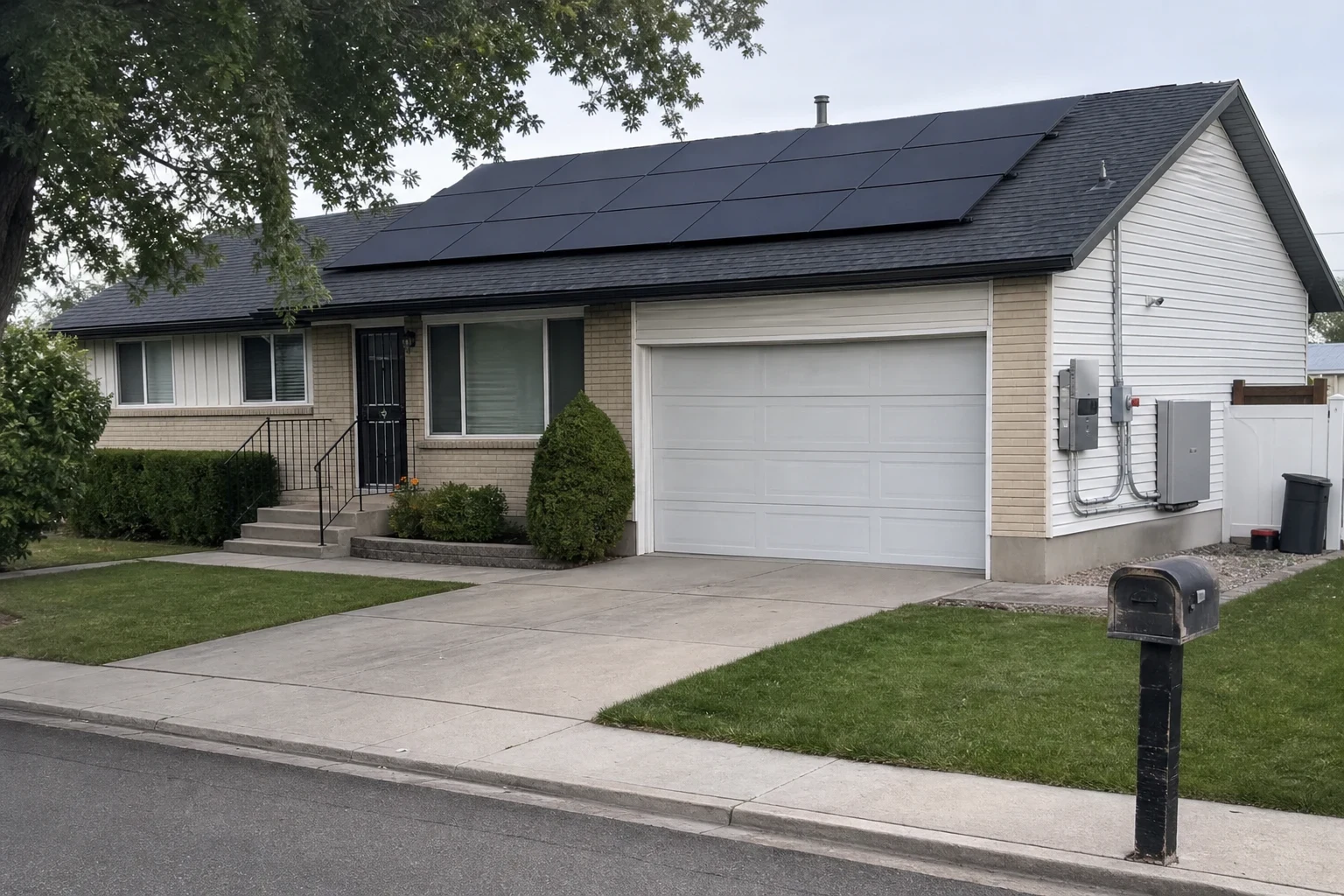
A roof-mounted system is a set of panels on low aluminum rails, fastened to your roof framing with flashed attachments and wired down to the equipment on the side of your home. The array sits close to the roof plane, keeps your yard free and puts the panels where the sun already reaches every day.
It is the right call when you have a roof face with good sun, when you want to cut your power bill over the long run, or when a recent outage or storm has you thinking about how your home gets its electricity. Many people start here and later pair the array with battery storage so the lights stay on when the grid does not.
We work at a measured pace. You get a clear design, a written estimate and plain answers before anything is ordered.
What the installation includes
- Roof inspection and shade check
- We check the shingles or metal panels, the decking and the framing underneath, and measure how much sun each roof face gets through the year. Winter sun sits low here, so we check shading in December as carefully as in June.
- System design from your bills
- We size the array from twelve months of your usage, not a rule of thumb. You see the panel count, layout and expected production before you decide.
- Flashed attachments and racking
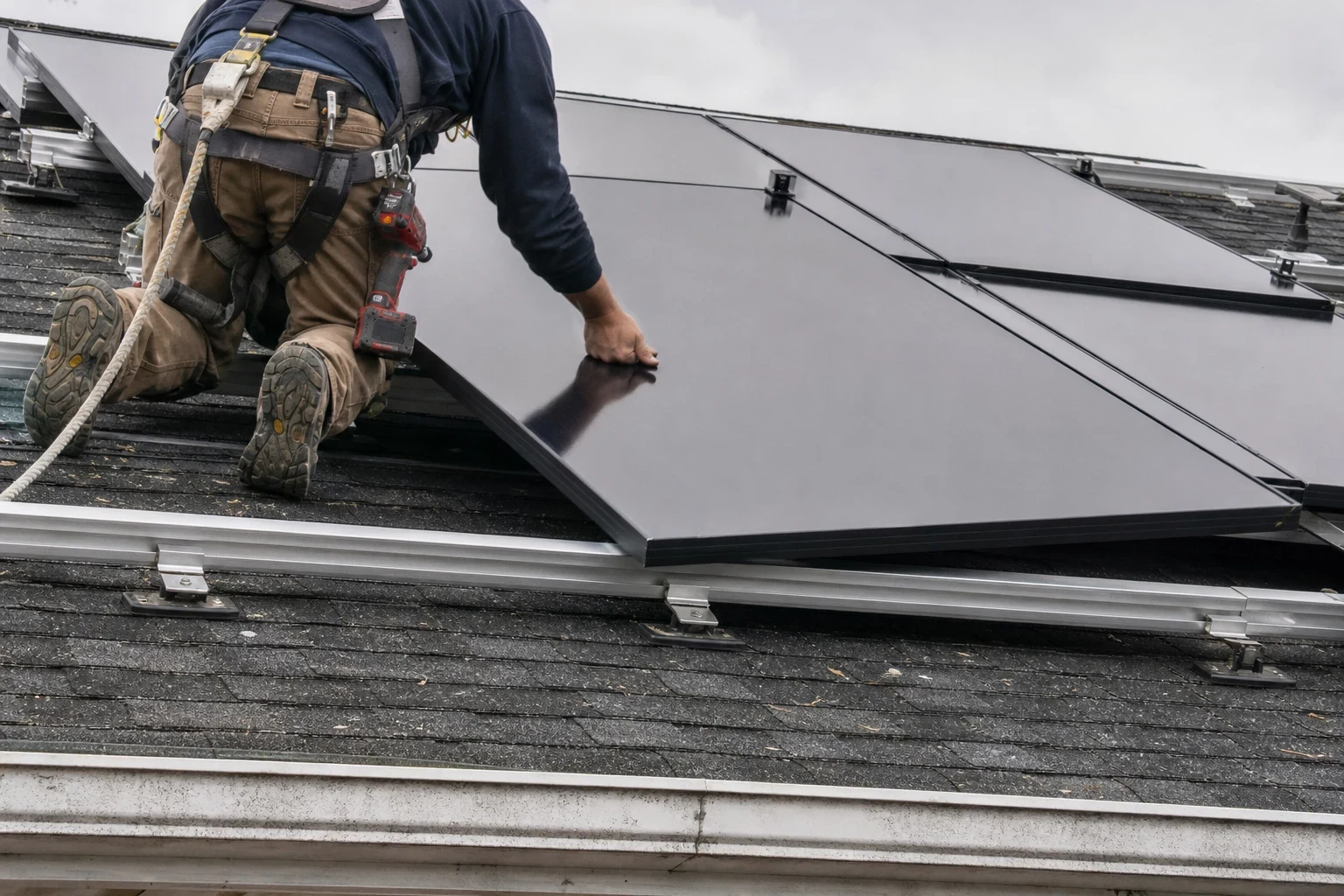
- Attachments are fastened into the rafters and flashed so water runs past them, or clamped to the seams on standing-seam metal. Aluminum rails go on top, specified for local wind and snow loads, so the array holds steady through a hard spring storm.
- Conduit to the equipment wall
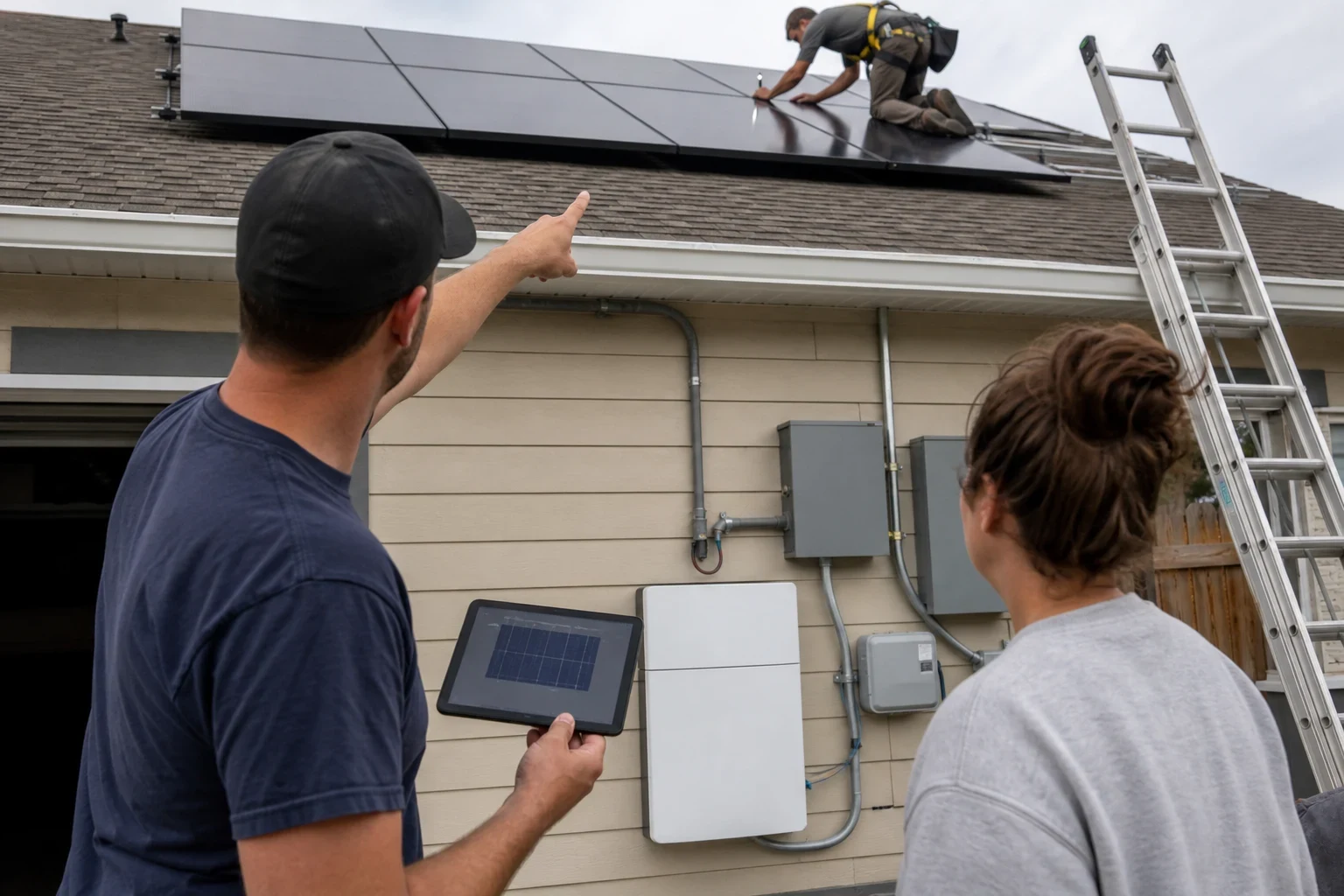
- Wire runs from the array through sealed roof penetrations and neat conduit down to the inverter, disconnect and electrical panel on your equipment wall. Runs stay straight and strapped tight to the house.
- Permits and utility interconnection
- We pull the building permit, schedule the inspection and file the interconnection paperwork with the utility. The system is switched on only after both approvals are in hand.
Signs a roof-mounted system fits your home
Your power bills keep climbing
Summer air conditioning and winter heating loads add up. An array that offsets a large share of that use steadies your monthly costs.
Your roof gets good sun
A south, west or east roof face with little shade from trees or neighboring homes is the main requirement. We confirm it with a shade check before you decide.
Your roof has years of life left
Panels stay up for decades, so a sound roof matters. If yours is near replacement, we tell you so and help you plan the timing.
A recent outage got your attention
After wind or snow knocks out power, many homeowners want more control over their electricity. Solar is the first step, and adding a battery later keeps essential circuits running.
You want to keep your yard open
A roof array uses space you are not using for anything else, so lawns, gardens and driveways stay just as they are.
What moves the price
Every array is priced from its own design, so we quote after seeing your roof and your bills. The figures below are what shift the number up or down. Installation is available with $0 up front, and we explain financing terms plainly on the phone.
System size
More panels mean more production and more material. We size to your use so you are not paying for capacity you will not need.
Roof pitch and layout
Steep pitches, several small roof faces or a long run to your equipment wall add labor and material. A simple, sunny roof plane usually lowers cost.
Roofing material and condition
Shingle, standing-seam metal and other roofs each take different attachments. Damaged decking or worn shingles may need repair first. We note this at the inspection so it shows up in the estimate, not as a surprise.
Electrical panel capacity
Some older panels need an upgrade to accept a solar connection. If yours does, we say so in writing before work starts.
Equipment choice
Panel efficiency and inverter type affect price and output. We explain the tradeoffs in plain terms and let you choose.
How your installation runs
- 1
The phone call
Tell us a little about your home and roof, and we set up a site visit or a free virtual appointment. Keeping a recent utility bill nearby helps us give you more useful answers.
- 2
Design and written estimate
We return with a layout, a production estimate and a line-item price. Nothing is ordered until you approve it.
- 3
Approvals and a build date
Our office files for the building permit and submits the interconnection application to the utility on your behalf. When those are underway, we choose a start date around the forecast, since crews should not work on a wet or icy roof.
- 4
Build days
Most roof installs take one to a few working days: attachments and flashing first, then rails, panels and the conduit run to your equipment wall. Crews work in harnesses, the site is tidied each evening and packaging leaves with us at the end.
- 5
Inspection and switch-on
Once the city inspector has signed off and the utility has given its approval, we power up the system. We walk you through the monitoring app and show what healthy output looks like from season to season.
Questions about solar panel installation
Will mounting panels cause my roof to leak?
Each attachment goes into the roof framing and is flashed so water sheds around it, and every penetration is sealed. On standing-seam metal we can often clamp to the seams with no holes at all. We show you the attachment method before work starts.
Will the panels hold up to hail and wind?
The panels are faced with tempered glass made to withstand hail strikes, and the racking and attachments are engineered for local wind and snow loads. A carefully built array is designed to come through the storms this valley sees.
Do the panels still produce in winter?
Yes. Panels convert sunlight a little more efficiently in cold air, but the short winter days add up to a smaller total for the month. Snow usually slides off the smooth glass on a pitched roof within a day or two of sun.
Can I add a battery later?
Yes. We can plan the wiring now so battery storage connects easily down the road. Many homeowners add one after their first outage with solar.
Do you work outside West Valley City?
We install across the surrounding area, including West Jordan, Taylorsville, Kearns and South Jordan. Our Service Areas page lists the full region.
See what panels on your roof could produce
Share a few details about your home and your recent power bills, and we will sketch out what a roof-mounted system could generate for you. If a friend or neighbor goes solar after you, you can earn $1,000 for every referral that goes solar.