ServicesSolar System Add-Ons
Solar System Add-Ons in West Valley City
Your solar system can do more than it did on the day it went in. We add EV chargers, monitoring, surge protection and smart load control, each one matched to the equipment you already own so the whole system works together and holds up when the weather turns.
Building on the system you already have
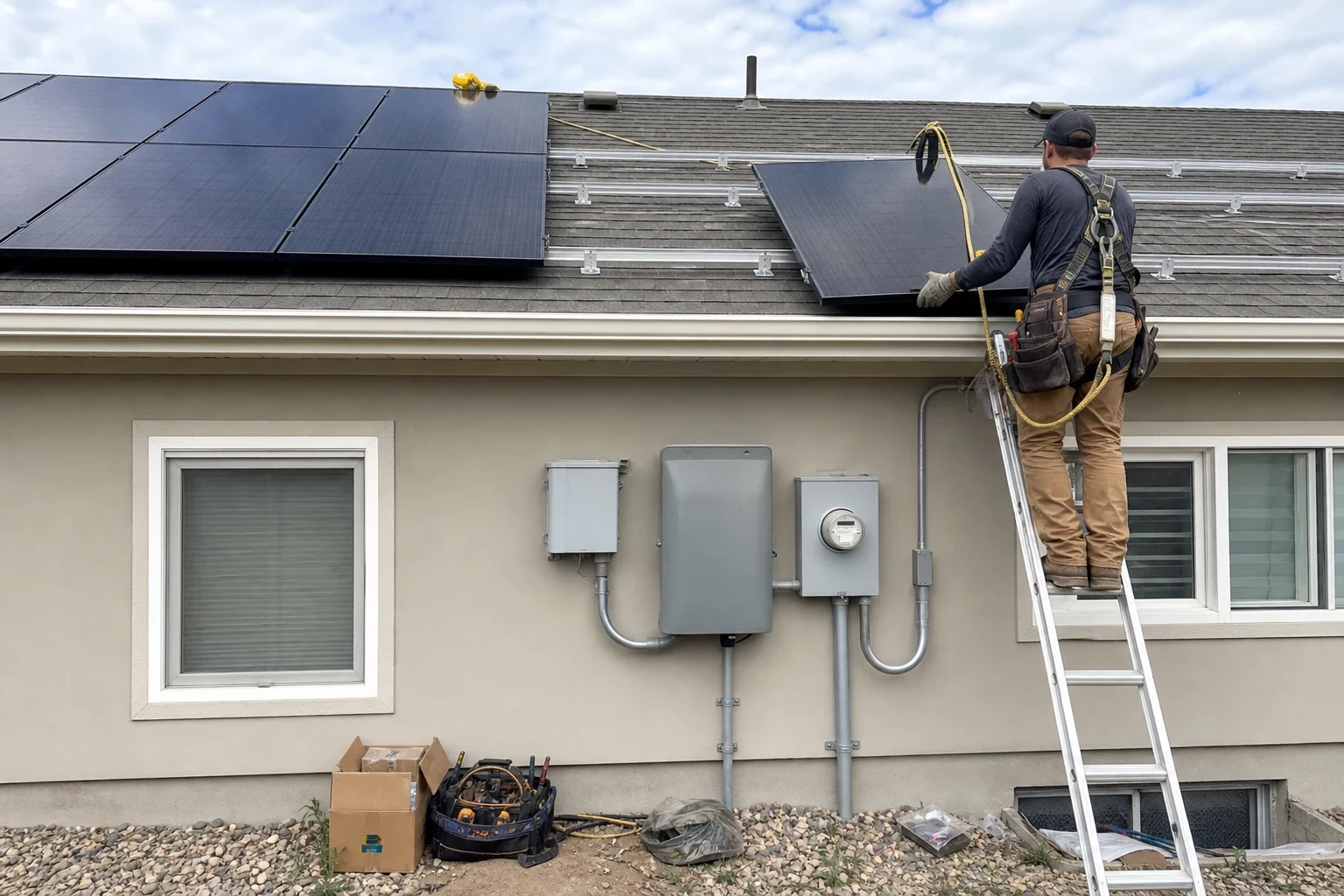
An add-on is any piece of equipment that changes what your existing solar does: charging a car, showing you what each circuit uses, protecting the inverter from power surges, or deciding which loads run first. The work happens at your home, mostly at the main electrical panel, the meter and the garage or side wall.
Good add-on work starts with what is already there. Inverter model, main panel rating and wire sizes all set limits, and an add-on that ignores them can trip breakers or quietly cut into your production. We look first, then recommend only what fits.
Many people call us after a windstorm or a summer lightning season shows them a gap in their setup. That is a sensible time to plan, and a calm one. If keeping power on during outages is the goal, our Battery Storage page covers that side in detail.
Add-ons we install
Home EV charging
A Level 2 charger on its own dedicated circuit, placed where your cable reaches the car without crossing a walkway. We confirm your panel has room before anything is ordered.
Production and consumption monitoring
Current sensors at the main panel show what your panels produce and what your home uses, hour by hour, in an app. After a hard storm you can see right away whether output dropped, instead of waiting for the next bill.
Surge protection
A whole-home surge protective device at the panel helps shield the inverter and your electronics from spikes caused by lightning and grid switching. It is a small piece of hardware that protects some of the most expensive parts of your system.
Smart load control
Smart breakers or a load controller let you set priorities, so the refrigerator and furnace fan come before the hot tub. It also helps a new EV charger share a busy panel without an upgrade.
Main panel and capacity upgrades
When an older or crowded panel cannot take another circuit, we plan the upgrade so it serves both your solar and what you add next. The finished panel is labeled clearly, circuit by circuit.
Signs an add-on makes sense now
- A new EV is in the driveway
- Charging from a standard outlet is slow, and nighttime charging changes how much of your solar you actually use. A properly placed charger and a look at your production fix both.
- The power went out and so did your solar
- Grid-tied systems shut off during outages for line worker safety. If the last storm left you in the dark despite a full array, load control and backup planning are worth a conversation.
- Your bill is creeping back up
- New appliances, a home office or a second freezer can outgrow the system you sized years ago. Monitoring shows where the extra use is going.
- You only see problems on the bill
- Without monitoring, a drop in output can go unnoticed for months. Real-time data lets you catch it early.
- Lightning season makes you nervous
- Flickering lights or electronics that reset after storms point to surges reaching your panel. Surge protection is a modest step with a clear payoff.
How an add-on project runs
- 1
A conversation first
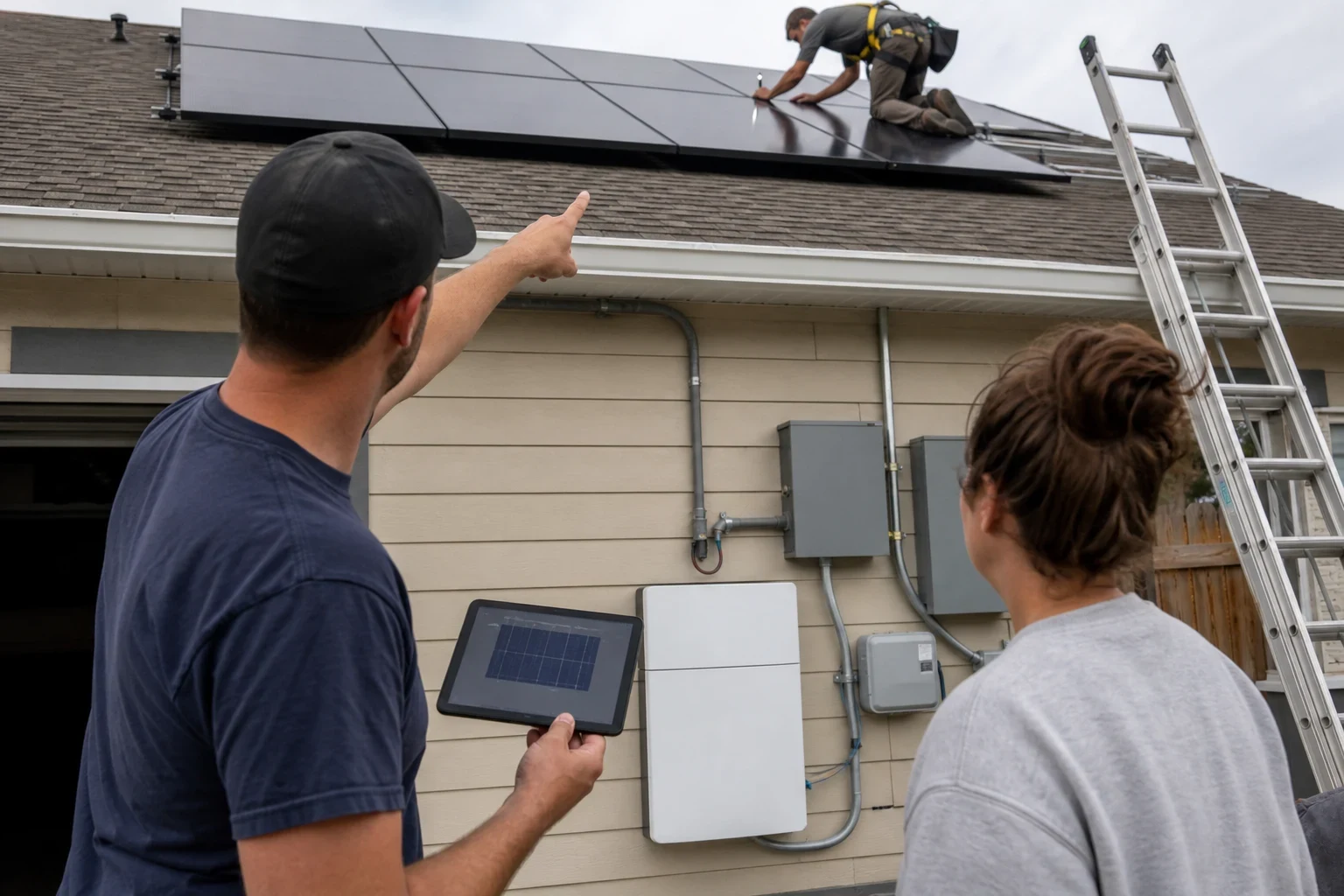
We talk through what you want the system to do, by phone or in a free virtual appointment. A photo of your inverter label and main panel often tells us a great deal before we visit.
- 2
An on-site equipment review
We check panel rating, open breaker spaces, inverter compatibility and the route each wire will take. You get photos of what we found.
- 3
A written, line-item proposal
Every piece of equipment, the permit and the labor are listed separately, so you can see exactly what you are paying for and choose what to do now or later.
- 4
Install day and walkthrough
Conduit runs straight and tight to the wall, penetrations are sealed and the panel is relabeled. We clean up, schedule the inspection, then set up any app with you and show you how to read it.
What shapes the price of an add-on
Add-on pricing depends far more on your home's electrical setup than on the device itself. Two homes ordering the same charger can see very different totals once wire runs and panel capacity are counted. Your proposal spells out each of these, and $0 up front is available.
- Equipment you choose
- Charger power level, monitoring hardware and smart breaker brands vary in features and cost. We explain the differences plainly and suggest what fits how you live.
- Distance from the panel
- A charger on the far side of a detached garage needs a longer, heavier wire run than one on the wall beside the panel.
- Panel capacity
- If your panel has open space and spare amperage, the job is simple. If not, load control or a panel upgrade enters the plan.
- Compatibility with your inverter
- Some monitoring and control products work only with certain inverters. Older equipment can mean an extra component to bridge the two.
- Permits and inspection
- Most electrical add-ons need a permit and inspection, and we handle both as part of the job.
Questions about solar add-ons
- Can you add equipment to a system another company installed?
- Often, yes. We review the inverter, panel and existing wiring first to confirm the add-on will work with them. If something would not be compatible, we tell you before you spend anything.
- Will an EV charger force me to replace my electrical panel?
- Not always. Many panels have room for a dedicated circuit, and smart load control can let a charger share capacity on a fuller panel. We check the numbers at your home and show you the options.
- Will monitoring tell me if a storm affected my panels?
- It shows you production in near real time, so a sudden drop after high wind or hail is easy to spot. It cannot diagnose the cause, but it means you know to look into it right away rather than months later.
- Do I need a battery to keep power on during an outage?
- For solar to run your home when the grid is down, yes, some form of storage is needed. Surge protection and load control are useful on their own, and they also pair well with a battery later. Our Battery Storage page explains that equipment.
- Do I need to be home on install day?
- It helps to have an adult home when the crew arrives. We settle the exact spot for the charger or hardware with you and switch off power at the panel for a short while. After that you can leave or carry on with your day, and we find you near the end to walk through the finished work.
Plan the next piece of your system
Tell us what you want your solar to do next and we will look at what your current equipment can support. You will hear honest options, with each cost listed.