ServicesSolar Panel Repair
Solar Panel Repair in West Valley City
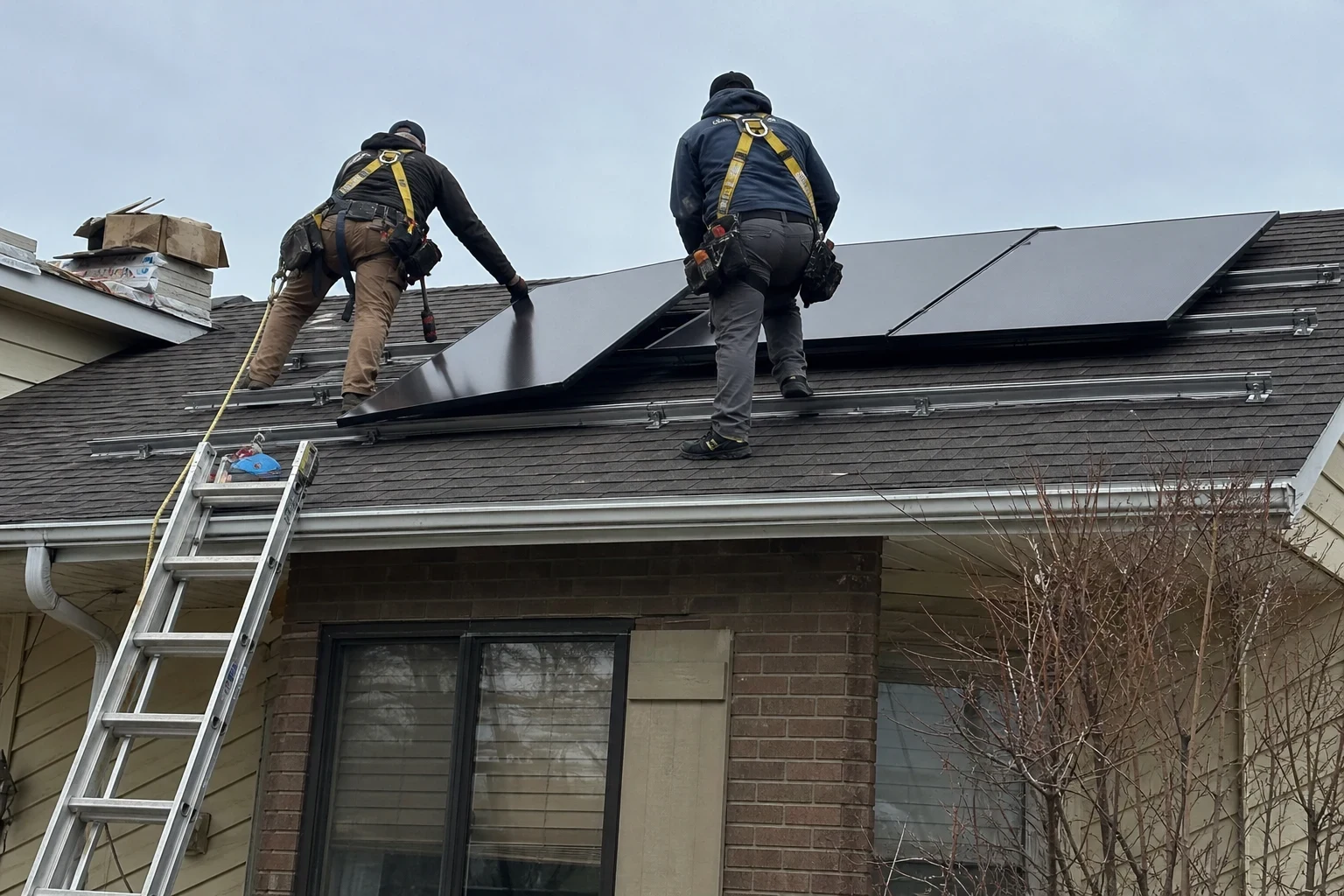
When a storm passes or your production numbers suddenly sag, we come out, look closely and tell you what we found. You get photos, a plain explanation and a written quote, so you can decide on the repair without guesswork or pressure.
What solar panel repair covers
Solar panels are built to sit outside for decades, but they are not indestructible. Hail can crack the tempered glass, high wind can loosen clamps and racking, and a single failed connector can quietly pull down the output of a whole string. Most problems start small and grow once water or heat finds the weak point.
Our job is to find the actual cause, fix it with matched parts and leave the array tidy and secure. After a storm, the sensible first step is a careful look before anything gets replaced. That is how we approach every repair visit.
If the system is older or the harm is widespread, we will say so. Sometimes the better answer is new equipment, and our Solar Panel Installation page explains how that work runs.
What a repair visit includes
Visual and electrical inspection
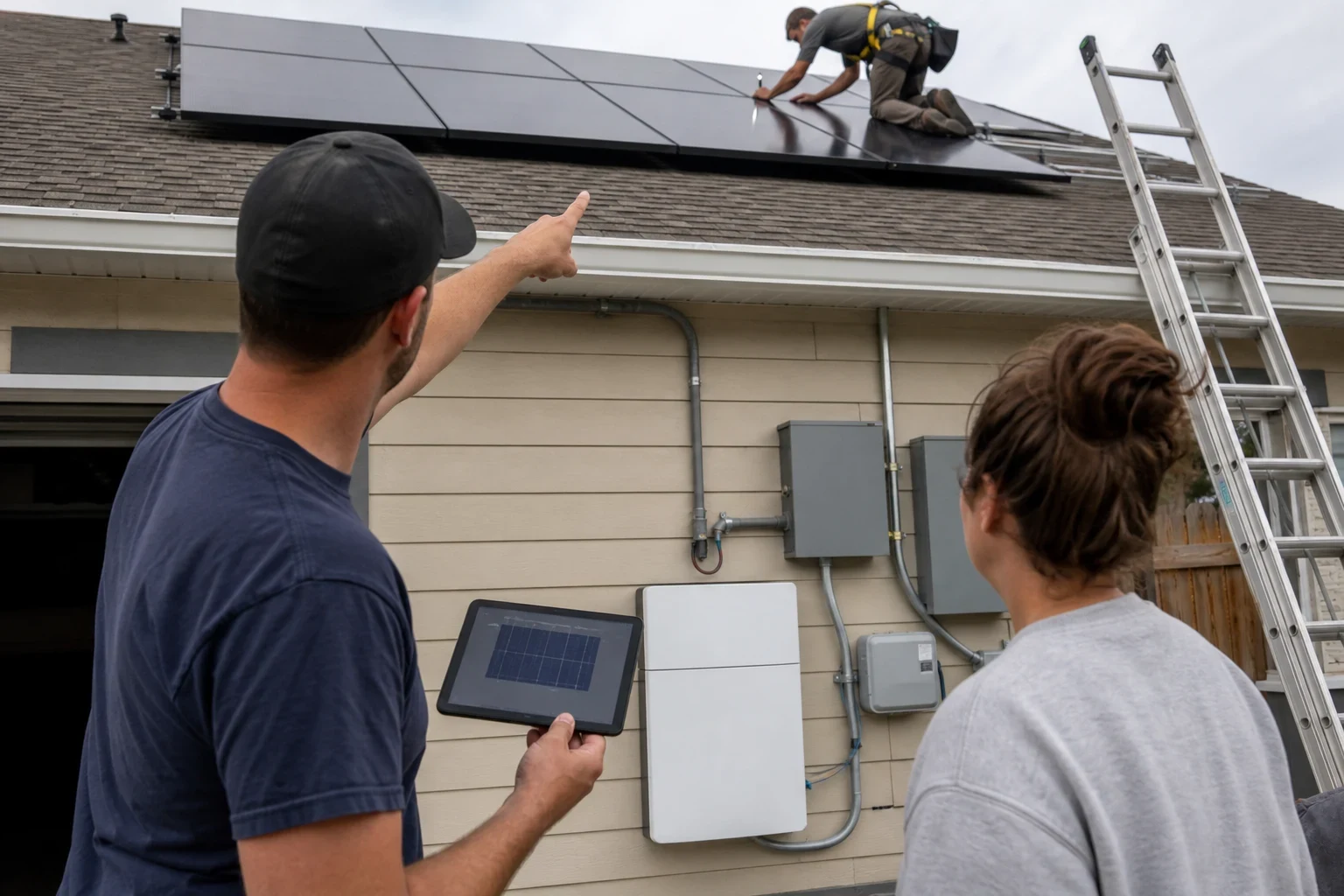
We check glass, frames, wiring and racking by eye, then test string voltage and current. Comparing readings across strings shows which panels are underperforming and which are fine.
Photos of what we find
You see the cracked cell, the scorched connector or the loose clamp for yourself. Those photos are also useful if you choose to file an insurance claim.
Panel replacement with matched parts
A replacement panel needs to suit the electrical characteristics of the rest of the string. We source compatible modules so one new panel does not drag down its neighbors.
Wiring and connector repair
Weathered or poorly seated connectors are a common cause of lost output and heat buildup. We replace them with proper fittings and secure loose wire runs away from sharp edges.
Racking and mounting fixes
We retighten or replace clamps, rails and hardware that shifted in wind or under snow load, then confirm the array sits square and firm.
Inverter troubleshooting
Error codes and blank screens get diagnosed on site. We confirm whether the inverter itself failed or is reacting to a problem upstream.
Signs your panels need a closer look
- Output dropped after a storm
- Compare a sunny day this week with a similar day last month. A clear drop after hail or wind usually points to a cracked panel or a disconnected string.
- Cracked or cloudy glass
- Even a hairline crack lets moisture reach the cells over time. Spider-web patterns are typical of hail strikes.
- Inverter warnings or a dark display
- Fault lights, ground-fault messages or a screen that stays off in daylight mean the system has shut itself down or lost a connection.
- Brown spots or discoloration
- Burn marks on a cell or near the junction box suggest a hot spot, which should be dealt with before it worsens.
- Loose or shifted panels
- Rattling in the wind, a panel out of line with its neighbors or hardware lying nearby all mean the mounting needs attention.
How a repair job runs
- 1
A phone conversation first
You tell us what you noticed and when it started. If you can share inverter or monitoring readings, that helps us arrive prepared.
- 2
On-site inspection
We inspect the array, test each string and photograph anything out of order. We keep foot traffic and ladders clear of plantings and finished surfaces around your home.
- 3
A written quote with options
You get a line-item quote that separates what must be fixed now from what can wait. If replacement makes more sense than repair, we explain why in plain terms.
- 4
The repair and a final test
We shut the system down safely, make the repair and bring it back online. Before leaving, we confirm production, clear away packaging and old parts, and walk you through what changed.
What moves the price of a repair
We look before we quote, because the price follows the fault we find. Reseating one connector takes a fraction of the time and parts that a hail-cracked panel does. Every item sits on its own line, so you can see exactly what you are approving before we start.
- How many panels are affected
- One cracked module is a contained job. Hail across the whole array means more parts, more labor and more testing.
- Part availability
- Older or discontinued panels can be harder to match. We look for compatible replacements and tell you if a close match changes the plan.
- Access to the array
- How easily we can reach the affected panels changes setup time and the equipment we bring.
- Inverter and electrical work
- Replacing an inverter or rerunning worn wiring adds cost compared with a straight panel swap.
Solar panel repair questions
- Will my homeowners insurance cover storm damage to my panels?
- Many policies treat attached solar equipment as part of the home, but coverage varies from policy to policy. We do not act as your adjuster. We give you dated photos and a clear written description of what failed and why, which is what most adjusters ask for.
- Should I shut my system off after hail?
- If you see broken glass, exposed wiring or the inverter shows a fault, turning the system off at the disconnect is reasonable. Stay clear of broken panels and do not try to handle them yourself. Then give us a call and we will look it over.
- Can one bad panel affect the whole system?
- Yes. On a string inverter, a single failing panel or connector can reduce the output of every panel wired with it. That is why we test each string rather than only looking at the obvious crack.
- Is it better to repair or replace an older system?
- It depends on the age of the equipment, how many panels are affected and whether parts can still be matched. We lay out both paths with their tradeoffs. If replacement is sensible, you may also want to read about Battery Storage before deciding.
- Do you work on systems another company installed?
- Yes. We inspect the existing equipment, note the brands and wiring layout, and quote the repair the same way we would for any system.
Find out what the storm left behind
A short call is enough to set up an inspection. We look closely, show you what we found and give you a written quote before any work starts.